Telecom was the major mass consumer business to arise out of the process of economic reforms. It has continued its growth several fold
Telecommunications at the crossroads in India’ (IIMB Management Review, Volume 27, Issue 3, September 2015, Pages 196-208) Subhashish Gupta, says that, “Even sceptics should describe the story of telecommunications in India, after deregulation and liberalization, as a spectacular success. There have been a few twists and turns as in most industries, but the narrative of high growth and low prices cannot be denied”. Clearly, there is no need to labour the point. Retail and banking too have grown, but they were established businesses even during the license raj. In the case of oil exploration and refining, the post-economic reform failed to succeed in the retail sector, while telecom created a mass market; it is the poster business of India’s economic reforms.
From a historical perspective of India’s economic development, this is especially significant given the ‘mixed economy’ model (in neutral terms) or state capitalism (in politico-economic terms) that characterized India’s growth since the second five year plan, which was based on the capital-goods model. Without getting into the analysis of this model of economy, we can safely say that the 1980s did see the beginnings of a mass market in textiles followed a little later by passenger cars but nothing on the scale of what telecom (together with phone devices) has achieved in the last 10-15 years. It is also interesting to note that this development has run concurrent with global developments in telecom, devices, cable and internet businesses. It is equally interesting to note that any latency between global developments and their impact in India has been quite low.
However, none of these developments and the way people have taken to them would have been possible but for the increasingly sophisticated smartphones with substantial processing power. All technological developments in telecom per se could not have created such a huge market but for smartphones and even feature phones. The central role of devices in our lives has given it a central role in telecom as well. Telecom has become a larger space than an industry and this is where the battle lines are being drawn in India amongst the major companies. More so as some telecom carriers such as Airtel have even gotten into the business of payment services by setting up payment banks. This development only reinforces the observation that mobile phones and tablets have played a singular role in the transformation of the business of telecom from a simple voice carrier to voice & data carrier to anything carrier. We may mention that some telecom companies (such as AT&T, Airtel, Tata Communications, SingTel, to mention a few) have even gotten into the business of offering software services to customers. Considering the impact it has had, we could argue that, from the perspective of the growth of capitalism in India, the post-economic reform telecom industry is comparable to the textile industry that ushered in and came with the development of industrial capitalism in the eighteenth century – a consumer-led capitalism albeit within a regulatory framework.
Virgin territory – learning curve
There is another reason why the telecom space holds an important lesson for all India scholars. In the initial stages of the evolution of telecom, neither the carriers nor the government had any real grasp of the potential lurking within it. It is hardly surprising therefore that confusion reigned during this period: this was virgin territory and every agency went through a learning process. It is a warning to any student, especially from the left, not to fall into a straight-jacket notions of firms’ influence and how big business ‘controls’ policies, because the dynamics of policy-making and influence-peddling (in India’s telecom) have been complex. Those who are familiar with the manner in which license fee was initially charged and the changes it went through will recall that this was not a straight-forward case of businesses controlling policy.
In 1994, the license fee was fixed and many thought it was unreasonably high. In 1999, under pressure from the industry, the government changed the basis to a revenue sharing model. This change has been debated as to whether it was in national interest, but the point is that, during the early days, the response to mobile phones was lukewarm, as the business user, who was expected to be the early adopter, failed to embrace the new industry in large numbers. It was only when the ‘social user’ turned out to be the driving factor did firms and the government realise their misplaced faith and ill-conceived licensing policy. If anything, the policy just showed how governments too can get ‘greedy’ when they spotted an opportunity. While no policy is innocent of influences, there are situations when there is a learning curve for everyone. Unfortunately, this crucial dimension is missing in many studies, especially from the left, of the way influences are created on policy-making. In fact, such studies tend to attribute a little too much power and knowledge to the ‘state’, when such is not always the case. Even the powerful falter.
Lest this be misconstrued, this space too became vulnerable to influence from the big firms, especially those who entered it late, but that is hardly any insight because there has been no industry (barring probably IT) that has not seen such influences in India or elsewhere for that matter. For instance, the policy on ‘limited mobility’ (in the 1990s) was brought in principally to accommodate a large business house which entered the sector late. Or consider the battle between CDMA and GSM technologies, with the latter winning decisive victories the world over. In general, we may say that, whether it was the license raj or the liberalized environment, some firms have always found a way to shape policies to their benefit. This has been so well documented in both the business media and in academic books that it doesn’t warrant any emphasis. That business often dictates, not just determines, policy was an insight once, long ago. Now it is a common observation and it is to the credit of business media in the world that this has been demonstrated with specific reference to specific policies and specific businesses. The limited point here is that firms are not omniscient; nor is the government.
In the aftermath of financial markets crisis, several books detailed the sordid story of how some investment banks manipulated the housing mortgage market. Or consider the revelation that many banks were found to have consistently tampered with that most sacrosanct interest rate – Libor. Books like ‘Too big to fail’ or ‘The spider network’ are good examples of such journalism, which exposes the behind-the-scenes arrangements and transgressions that have characterized many businesses. And enough has been written about the oil and gas industry. An excellent example is Steven Coll’s ‘Private Empire’, a study of ExxonMobil. All these writers stay committed to a neoliberal framework; they never question its relevance but doesn’t also prevent them from exposing ‘deviations’. The radical doesn’t come only in red colour.
Telecom industry to telecom space
We may sum up the developments in telecom with the observation that telecom industry has metamorphosed into the telecom space; and we can trace this precisely to the growth of wireless telephony, internet and cable, rounding it off with the increasingly more and more sophisticated devices, as we have already mentioned. It is important to add that this is not an ‘Indian’ phenomenon; the transition from an industry to an entire space has been happening on a global scale. Some firms have grasped the potential in the space and have capitalized on this by spreading their wings. And an excellent example of this is Reliance Jio, whose foray into the telecom space has clearly unsettled incumbents in more ways than one. To reiterate what has already been said, the central role of devices in our lives today is a fact of decisive significance. Whatever be the intellectual framework through someone wishes to comprehend the post-reform telecom revolution in India, this observation will remain central. In fact, the power of a firm in telecom can be assessed based on whether it occupies telecom space or just telecom industry; and one critical component of that is spectrum, which has become more important than the telecom network. Followers of telecom will recall that the AT&T’s (failed) attempt to buy T-Mobile in the US was principally for the spectrum that T-Mobile owned. It is important to emphasise the shift
from the network to spectrum, although there was an earlier shift from network to software when companies like Microsoft, Oracle and IBM and the like began to have a greater role in the business of telecom which has today metamorphosed into the telecom space.
Oligopoly then and oligopoly now
And this brings us to the next point. Among India scholars, whether of the right or left, there is always this question of the difference between two periods – the license raj and the period from the 1990s. There has been extensive debate over the differences in relation to state capitalism, role of institutions, role of parliamentary system and its compulsions with a corollary debate on what this means to the economy. Some of a more directly Marxian persuasion have debated whether Indian economy was semi-feudal, semi-capitalist or semi-capitalist, semi-feudal or some such variations thereof.
During the licence regime, many large business houses cornered licenses but did not utilise them. Since the government had an operative concept of industry capacity, no more licenses were issued once this capacity was ‘exhausted’. Clearly, this denied entry to many resulting in an oligarchic industry structure. This is fairly well-known in India – that licenses were the main tool to stave of competition, a pre-emptive move as it were, as almost any standard text book on Indian economy will show. Many of these companies disappeared with the ushering in of economic reforms. There have been new firms largely because of new industries (IT, telecom, hotels and automobile) although in some traditional industries such as steel and cement too there have been new firms. There is no licensing today at least not in the sense in which it prevailed during the period prior to 1991 but there is no shortage of clearances. Hence, cultivating political relationships continues to rank in importance. If anything, political relationships have become more important than ever because there is a lot more at stake. And this is because scale has dramatically changed. In almost every industry in India, scale has increased to such an extent that raising capital has become such a critical skill.
Moody’s, the rating agency, has reported that Reliance Jio will remain cash-negative because, although it is poised to make revenues of Rs 20,000 crore, its capital expenditure is estimated to be Rs 15,000 crore for the financial year 2017-18. According to a report in The Financial Express (January 17, 2017), Reliance Industries (which parents Reliance Jio) had lined up an additional Rs 30000 crore for capital expenditure (http://www.financialexpress.com/market/reliance-jio-capital-expenditure-worries-drag-down-reliance-industries-shares-over-2/511030/). Consider steel. Figures of capital expenditure required to set up a greenfield steel plant estimated by Robo Consulting range from Rs 6,500 crore to Rs 51,000 crore. (https://roboconsulting.in/knowledgedesc.php?id=45). Analysys Mason, a research and consultancy firm focused on telecom, has reported that Indian telecom carriers will need to build 140,000-150,000 additional base stations.
It is no surprise that the telecom industry is oligarchic. It will become more so should Vodafone and Idea combine into one entity. Using any of the standard measures of concentration will indicate that top three or four firms dominate the market. Airtel, Vodafone, Idea and Reliance dominate the Indian telecom market. Others are a distant fifth or sixth or seventh or…
However, there is a significant difference between oligarchy then and now. Then it was a matter of cornering licenses; now it is a matter of the ability to raise capital. Many Indian companies have demonstrated the ability to raise funds both within and without the country. As a result, barring Vodafone, there is no global company dominating the Indian telecom space. This is in sharp contrast to the auto industry, consumer durables (both white and brown goods) including mobile phones, hospitality and a few others, which have been dominated by global companies. Even in the case of mobile phones, the competition is intensifying.
Final words?
Incidentally, the Indian telecom story also reminds us that the impact of globalisation on the domestic economy is not uniform and cannot be grasped through one framework. This is an industry that has seen many once-global-giants falling completely by wayside in India. At least in Indian telecom, we haven’t seen any evidence of the damning impact of global firms on domestic firms. One of the probable reasons could be the unique character of this technology itself. While the network technology demands large amounts of capital, the technology of telecom space has also spawned thousands of individuals to profit from its potential, because of the growth of apps and apps exchanges. Even small firms can flourish because they have an access to scale which they couldn’t have built. It is one of the ironies of contemporary capitalism that monopoly also breeds a large battalion of small firms. Microsoft, for example, cannot exist without the large and far-flung army of small firms, all over the world, who support all Microsoft products. Amazon.in, Flipkart, and others have been a boon to many small firms who use their platforms to sell their ware. And this is just
as true of other technology firms. The fundamental truth is that nothing can sustain itself by itself. No oligopoly can survive without an army of small firms who feed it and feed from it. If there is any disproportionate influence, it has been of global financial capital by way of private equity firms.
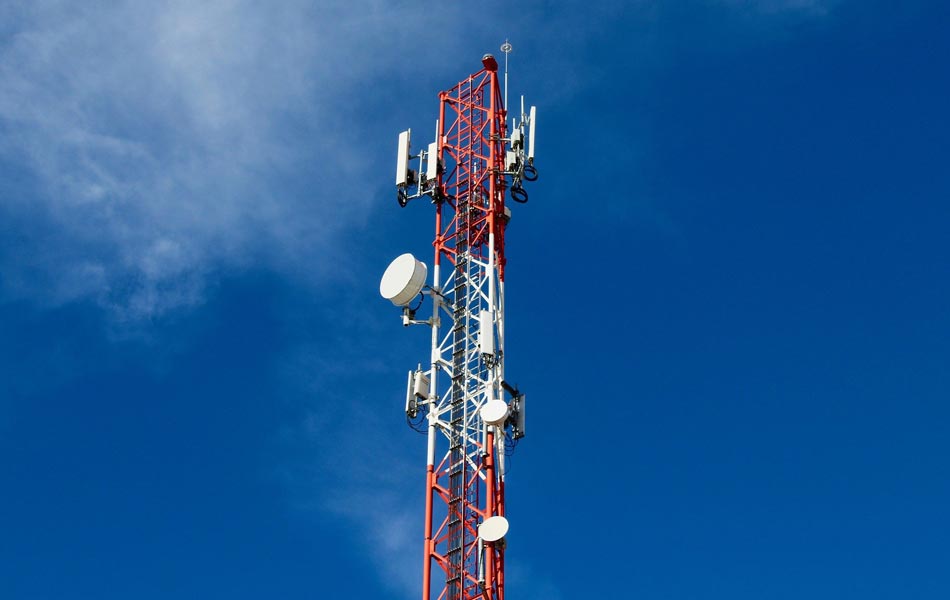
The telecom business has seen the coming together of more than one business into one as well as splintering; the best example of the latter is the tower business, which have been hived off from telecom companies into a separate business. It is also the case that in this industry, technology has allowed the camouflage of battles between groups of businesses as a struggle for democracy and access. Anyone who has followed the debate on net neutrality would have realized that a battle between telecom companies and internet companies was smuggled away as a battle for internet freedom. Given the very nature of wireless and internet technology, echoes of this debate have been felt intensely in India too.
The transformation of the business of telecom is not complete. The latest relevant change is the emergence of payment banks, an addition to the confluence of voice, data, entertainment and social media. Perhaps, telecom companies, following SingTel, will call themselves digital services providers.
There have been far-reaching and fundamental changes sweeping a business we know as telecommunications ever since I wrote this quasi-essay. I had mentioned that the industry had already moved from ‘telecom industry’ to ‘telecom space’ by which term I sought to capture the other businesses that were folding into the telecommunications business – cable TV, internet telephony, OTT to mention a few then. To this we can now add payments. All made possible by one device – smartphone. In the essay, I did emphasize the central role that devices play in our lives. That role continues to strengthen with the use of so many more devices, with the control embedded in the smartphone. The smartphone is being used also as a remote security device such that you will know who has come to your doorstep even when you are not at home. Let me recall that Singapore Telecom began calling itself a digital services and solutions provider in 2014, de-defining itself as a telecom company.
My point was precisely this – the possibilities are endless. And that no one had realized what the space held in store, each player discovering the potential slowly or rapidly, given their styles of management. One has gone on to transform this into a platform for raising capital and new technology partnerships. In fact, the word ‘platform’ itself has undergone and is still undergoing more than one metamorphosis, and we can only speculate what the future holds. Now, clearly that ‘future’ is a matter of probability – of how other technologies develop that may enable stretching current capabilities more and help acquire new capabilities. Take for example, near field communications, which emerged around a decade ago and gathered momentum a little later. We don’t know what NFC can do together with smartphones.
Classification is not an academic exercise as it has direct tax and duty implications. Keen readers may recall how telecom companies are hiving off directly non-telecom areas separately so as to avoid certain taxes levied by the government on Augmented Gross Revenue. This also helps create appropriate partnerships. This is an extremely interesting field and I am excited about writing.
This is an update to the original article which I had published a few years ago.
Image by Alberto Adán from Pixabay